Maxime Dassen

Hi, I'm Maxime (she/her). I am a PhD student in Artificial Intelligence at the IRLab of the University of Amsterdam, advised by Andrew Yates and Evangelos Kanoulas. My research focuses on AI safety and Mechanistic Interpretability for Language Models and Retrieval-Augmented Generation systems.

In 2025 I was a research visitor at the Johns Hopkins University HLTCOE as part of the SCALE program, and will return for SCALE 2026 to work on multimodal RAG.

How do AI systems coordinate what they observe with what they know?

Modern language models carry extensive parametric knowledge from pre-training, but when we ask them to use external evidence, as in retrieval-augmented generation, we force two sources of information into the same output. My research investigates what happens mechanistically when this coordination succeeds or fails, and what that tells us about hallucination, knowledge conflicts, retrieval sycophancy, and grounding in multimodal systems. I am particularly interested in bridging internal model mechanisms with human-centric outcomes to build accessible and trustworthy AI.

Ultimately, I am convinced that understanding the internal mechanisms behind the failures and successes of AI systems holds the key to making them more trustworthy, interpretable, and aligned with human needs.

profile photo

Selected Research

I'm interested in machine learning, deep learning, generative AI, natural language processing, and information retrieval. Some papers are highlighted.

ECIR '2026
FACTUM: Mechanistic Detection of Citation Hallucination in Long-Form RAG
Maxime Dassen, Rebecca Kotula, Kenton Murray, Andrew Yates,
Dawn Lawrie, Efsun Kayi, James Mayfield, Kevin Duh
European Conference on Information Retrieval (ECIR), 2026
arXiv code

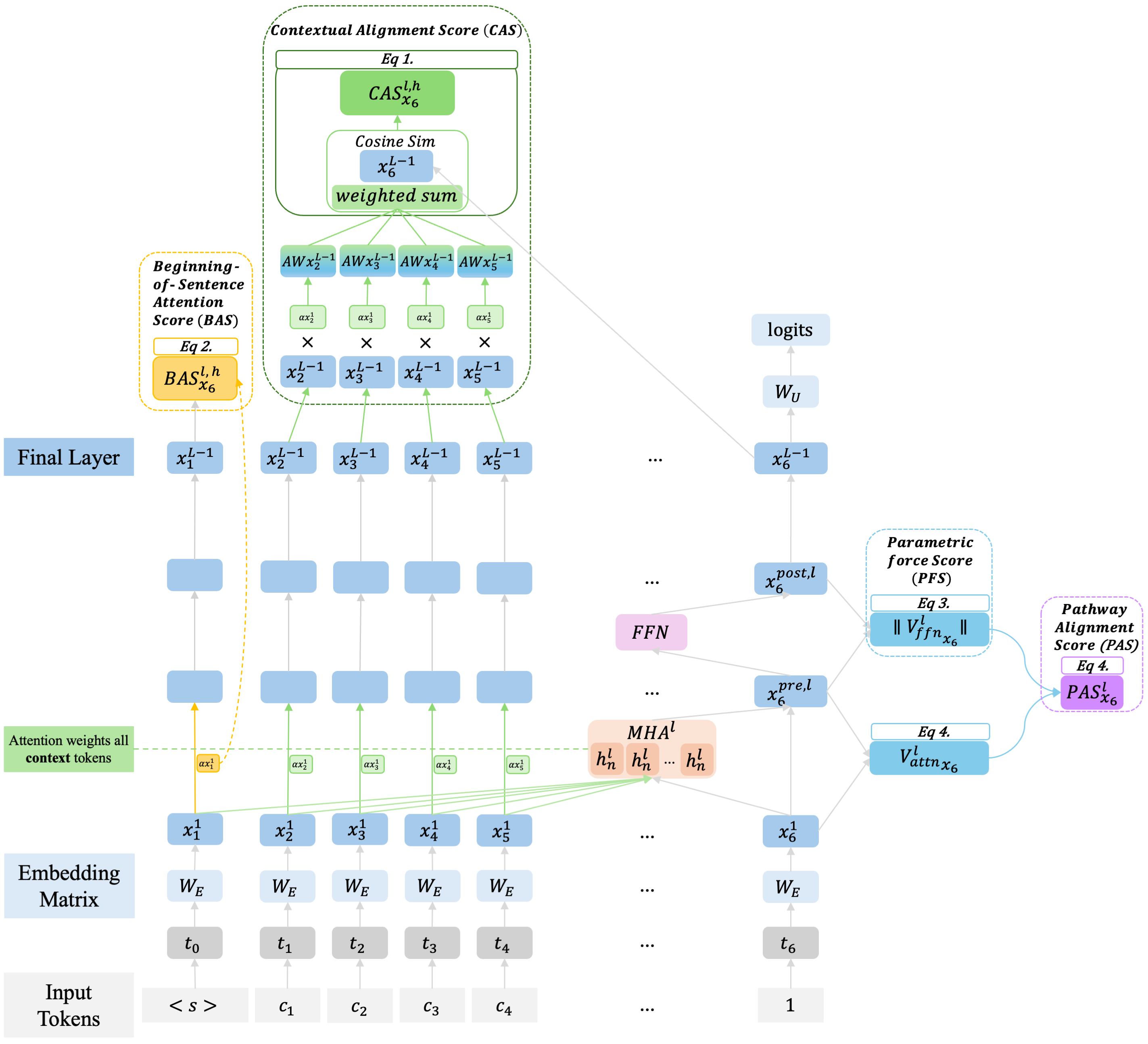
We introduce FACTUM, a mechanistic framework that detects citation hallucinations in long-form RAG by identifying scale-dependent signatures in transformer pathways, outperforming state-of-the-art baselines by up to 37.5%.


Template adjusted from this website.